Branded products
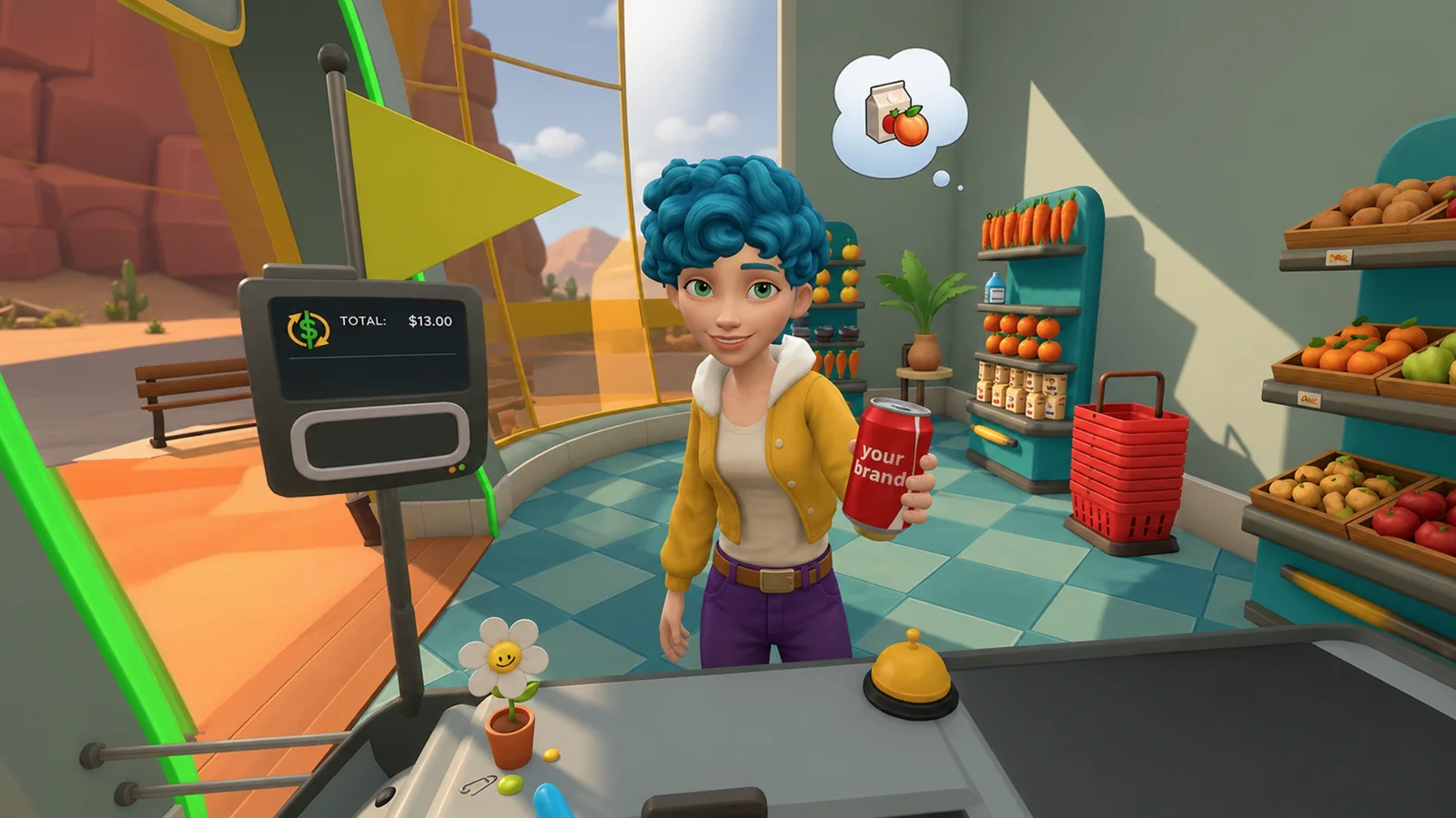
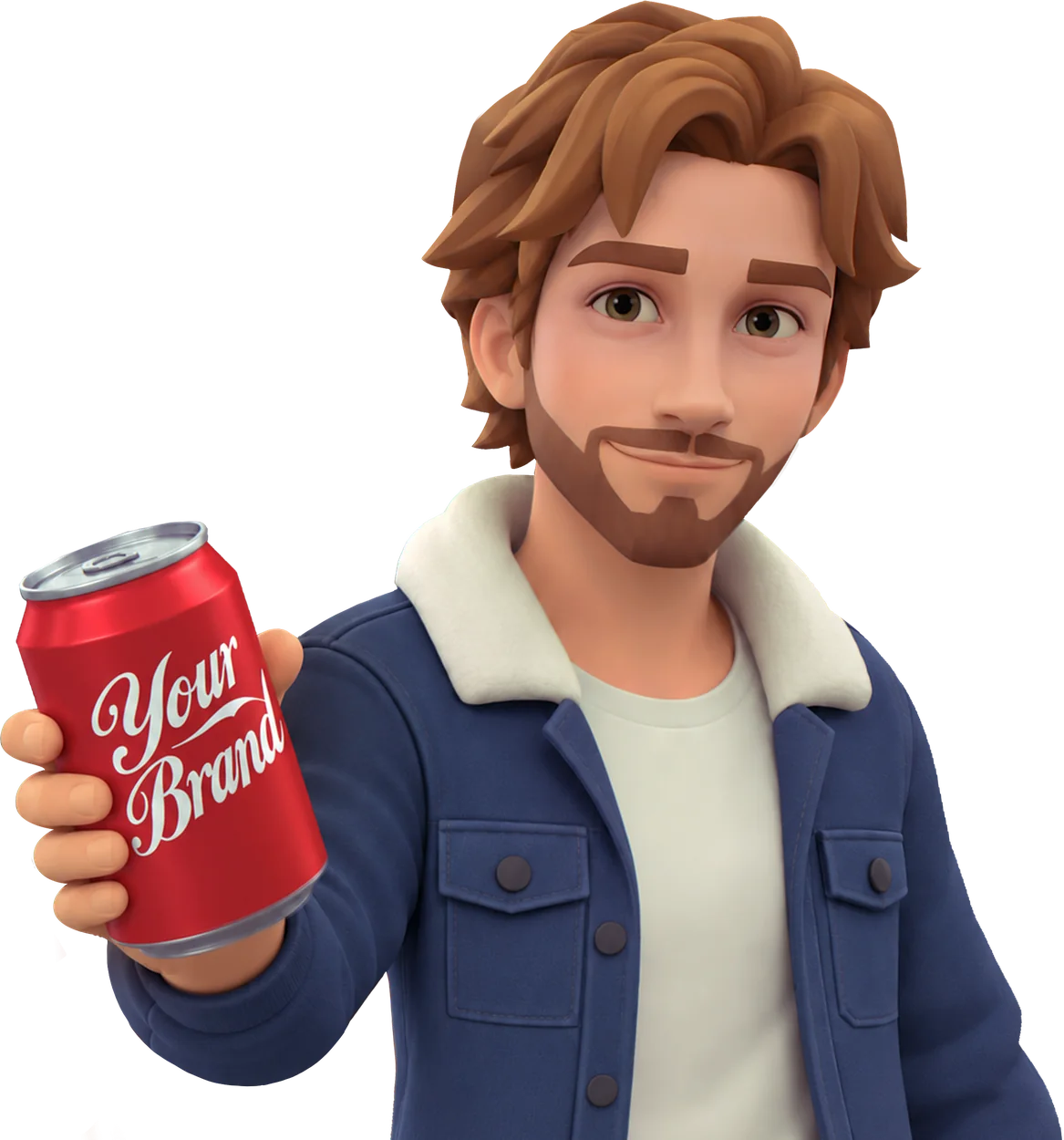
Your packaging wraps a prop the player picks up, buys or is handed by an NPC. Every one of those moments is counted as an interaction.
Views + interactions
Indie VR is a fast-growing audience, and nobody is selling ads in it. Your brand goes into the world itself — a sign on the wall, a product in the player's hands — and we count only what players actually saw.
See the numbersIndie games have a large and fast-growing player base, and almost none of it is sold to advertisers. We start with indie VR, then expand across mobile titles.
Sources: SteamDB and Alinea Analytics (Steam releases and indie revenue, 2025), Video Game Insights (indie share of releases), SQ Magazine and National Research Group (VR users, session length and demographics). Indie games earned about $4.4B on Steam in 2025 — roughly a quarter of the whole platform. This is an audience that already pays for what it plays.
Branded products the player picks up, wearables they put on, and signage built into the environment. Every format is restyled to each game's art style by our AI, inside the rules you set, then measured by what players see and, where the format allows, by what they handle.
Your packaging wraps a prop the player picks up, buys or is handed by an NPC. Every one of those moments is counted as an interaction.
Views + interactions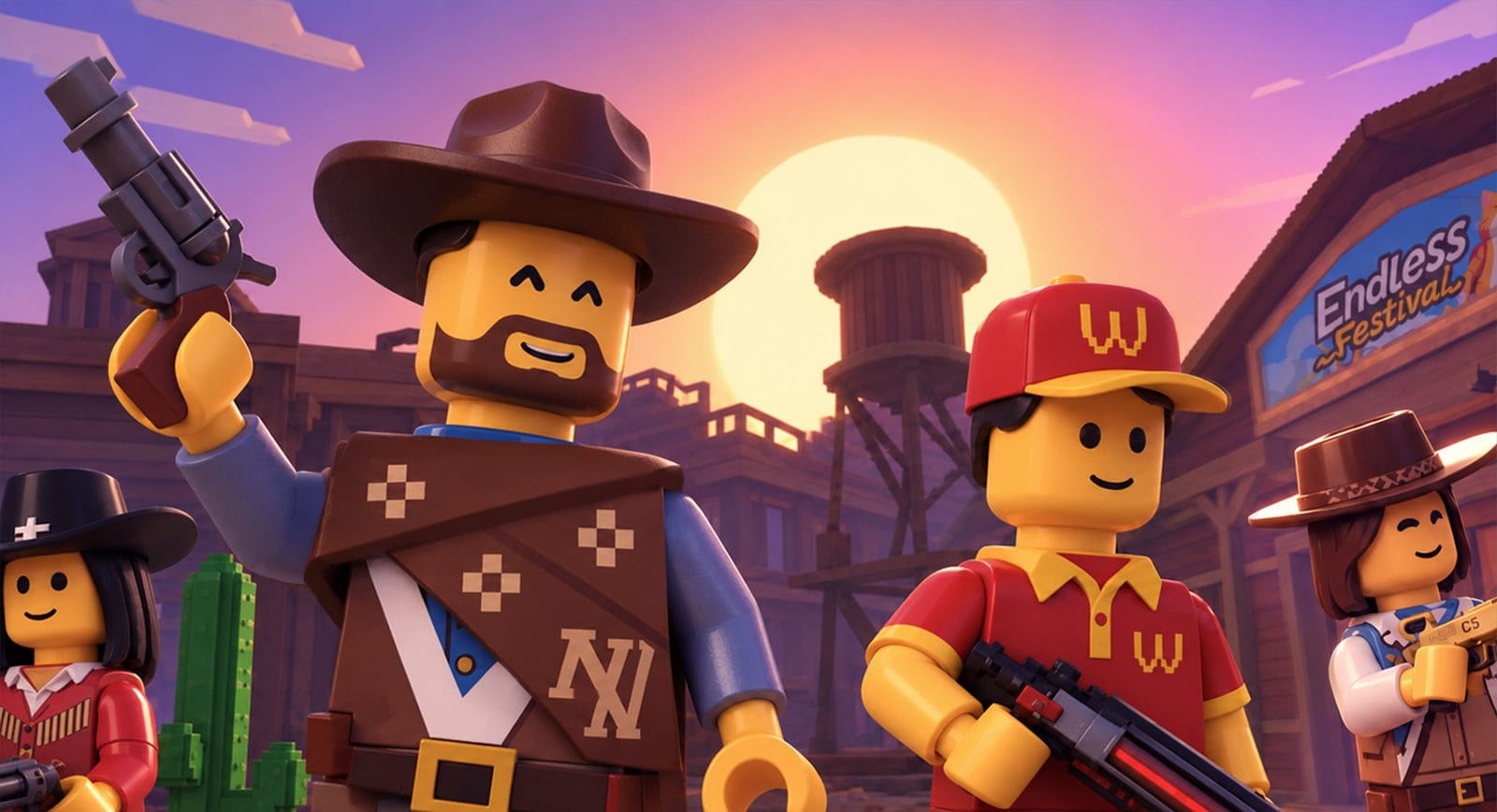
Outfits, props and mascots carrying your identity — worn by the player and seen by everyone else in the session.
* In development
Views + interactions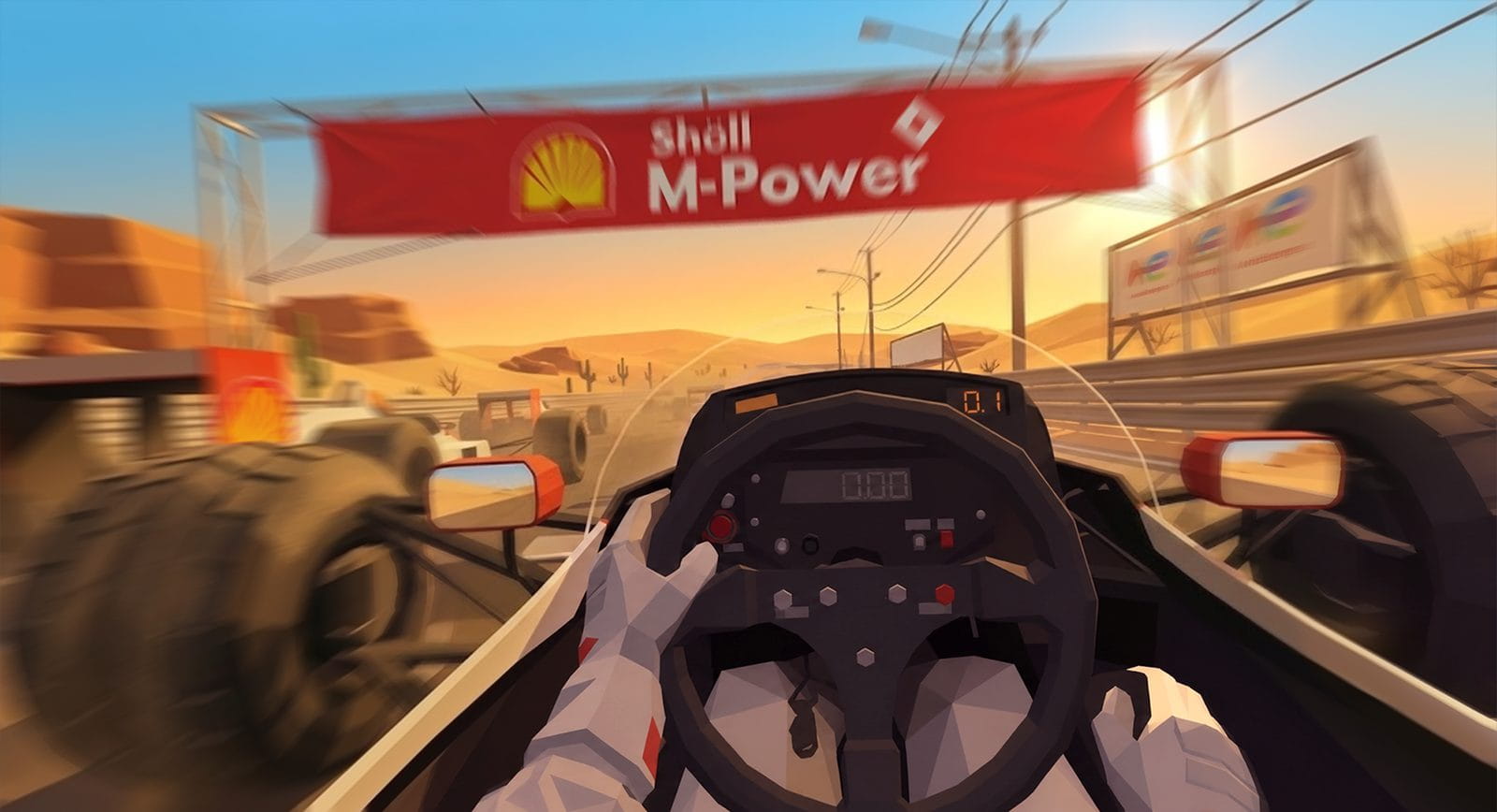
Signage where the eye already travels, counted by time on screen and angle rather than by requests served.
ViewsViews and interactions are reported separately, broken down by game, placement and format, in your dashboard the same day. Nothing is estimated and nothing is counted on requests served.
Time on screen, viewing angle, distance and apparent size. A placement nobody actually looked at is not counted and not charged.
Reported and billed as verified impressions.Picked up, held, used, worn or bought from a vendor. When the player handles your branded object, that contact is logged as its own event.
Counted separately, and priced separately.Views follow the IAB in-game measurement model: continuous time on screen, share of the viewport and viewing angle, with a minimum threshold per placement. Raw event logs are available on request.
Two things are non-negotiable: the identity stays intact, and the scene around it stays appropriate.
Before launch you review every styling variant — one per art style, not one per title — and strike out any you don't like. Nothing goes live without your sign-off.
Locked colours, fixed logo geometry, safe margins, minimum size and a list of effects it may never apply. The restyling changes the world around your identity, not the identity.
Studios can only put placements where our guideline allows — lit, unobstructed, at eye level.
Age rating, genre and scene type are all filters. Violent or adult contexts are excluded by default.
Targeting works from the game and the scene, not from an advertising ID.
One title or the whole flight, switched off from the dashboard without a game update.
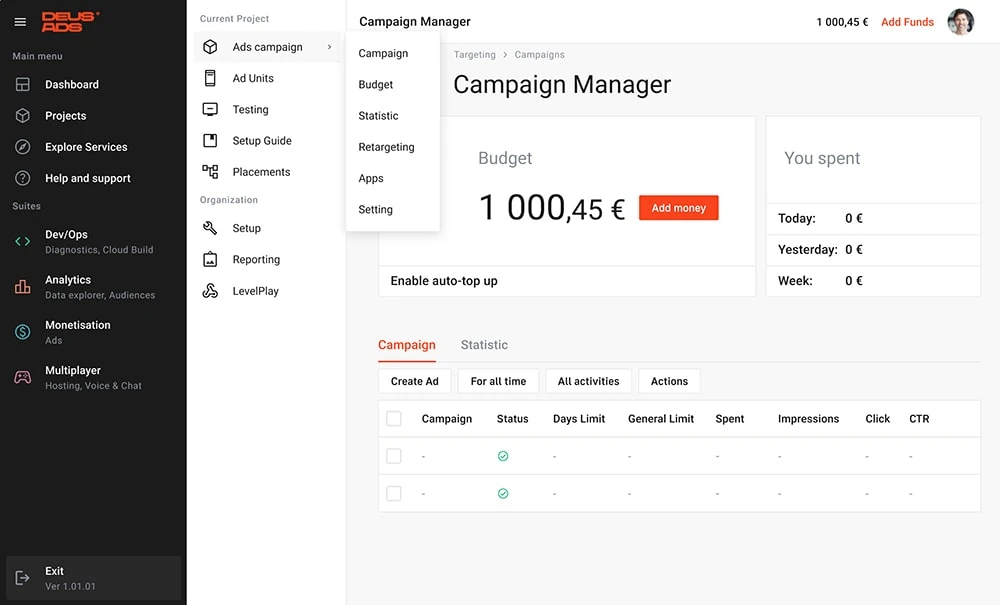
You upload the creative and your brand rules. We handle the matching, the AI restyling, approvals and measurement — while everything stays visible in one campaign manager.
Your asset and the brand ruleset — locked colours, logo geometry, effects that are off-limits — plus budget, dates and anything you need to stay away from.
We match titles by scene, audience and age rating. You approve the shortlist before anything is booked.
Your asset and your brand rules go to our AI, which restyles it into each art style on your shortlist. You review every variant and sign off, and so does the studio.
Views and interactions land in your dashboard the same day. Only verified activity is billed.
One place for the whole flight: where you are running, what it looks like there, and what the players actually did with it.